Progress continually poses challenges that education and training have to accept. Today, in the field of music and violin making, the crucial point is to learn how to combine the tradition made of skills, experience and ancient secrets with the continual innovations required by and born from an ever-changing society and market — whether local, national, or international.
Within our school, students explore the fascinating world of violin making; they are able to study sound and technique, gain experience, and develop their craft in individual ways depending on the specific capabilities of each student. Practical activity and projects are always supported by a solid cultural background, thus reinforcing the students' understanding that only a profound knowledge of the past and a structured technique will enable them to explore modern possibilities and to undertake innovative projects — the fruit of their own intuition and creativity.
The ultimate goal of our didactic strategy is to stimulate students' interest in intense research as a practice supported by study and exchange of ideas.
A unique
cosmopolitan climate.
The coexistence of such diverse students creates a unique cosmopolitan climate within the school, rich with different cultural contributions but also with common interests, like a passion for violin making and music. The rich cultural heritage of the school continues to encourage an exchange of skills, knowledge, and life experiences. The unique presence of adult students also encourages the maturation of the teenage students.
The school welcomes both students at the high school level and students, Italian and foreign, who have already earned their high school diplomas. Precisely because of the diverse background of the students, the school has for some time offered personalized study plans for each individual.
How we teach.
§2 · Costruzione della sezione aurea — lo stesso rapporto (φ ≈ 1.618) che regola le proporzioni degli archetipi storici guida ancora oggi il metodo didattico: precisione, misura, ripetizione.
Workshop-first
Starting in the first year, functional labs are provided for all students, allowing for high quality work in safe working conditions, limited to 10–12 students per laboratory.
Personalized study plans
The school offers personalized study plans for each individual, involving the possibility of acquiring "credit" in subjects already studied and replacing them with extra hours of laboratory or professional disciplines, or Italian language courses for foreign students.
External collaborations
The school organizes special projects, enrichment courses and collaborative opportunities with outside professionals for third, fourth and fifth year students.
Internship in year 5
Immediately upon graduation, fifth year students complete a work-study program, interning in the workshops of professional violin makers and submitting a scholarly account of their work, experience and acquired skills.
Cultural curriculum
Alongside craft, students study music theory, acoustics, art history, and the cultural heritage of Cremona — forming well-rounded professionals, not just technicians.
106 current students
From 1938 to today, 916 students have graduated. Currently there are 106 enrolled students at the school, representing over 40 countries.
A historic
setting.
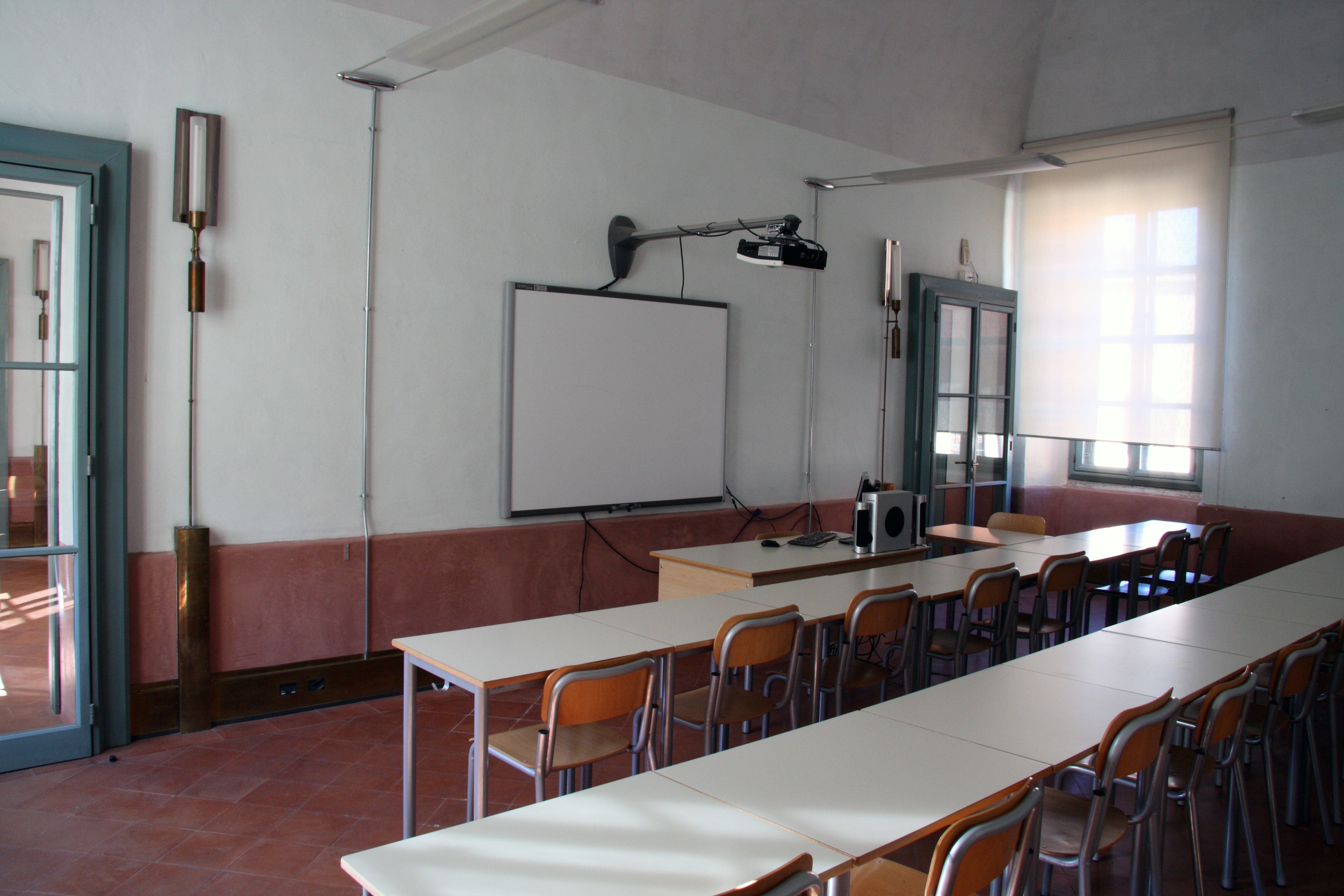
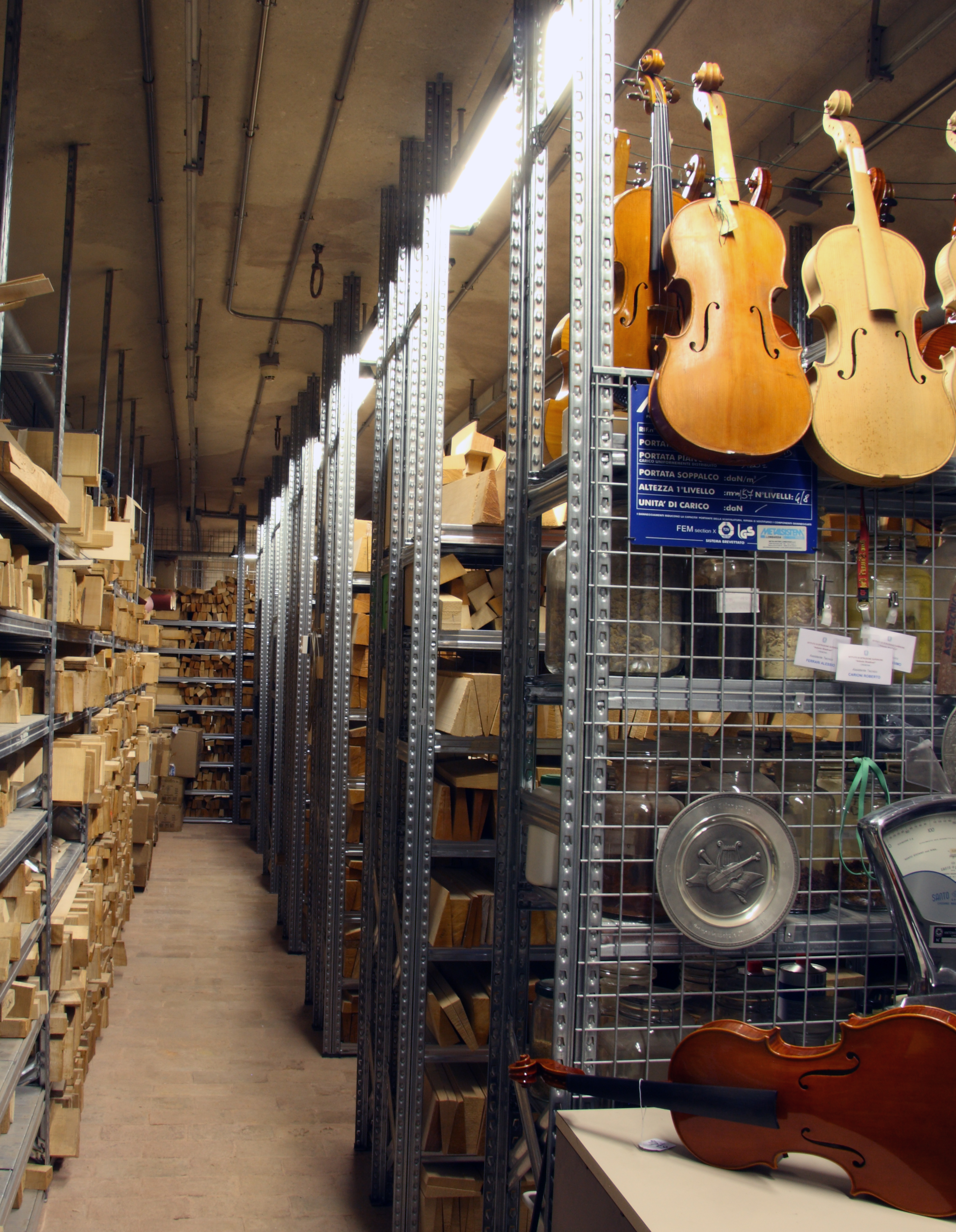
The school occupies a historic building in the center of Cremona, with vaulted workshop spaces, specialized labs, a wood and materials archive, and classrooms equipped for both theory and practice.
The wood archive — stocked with aged spruce tops and maple backs — is one of the most extensive in any teaching institution in Europe. Students choose their materials from the same archive, learning to evaluate wood quality as a fundamental craft skill.
| Founded | 1938, Cremona, Italy |
| Part of | IIS "Antonio Stradivari" |
| Diploma | Italian Maturità — Liuteria specialization |
| Duration | 5 years |
| Workshop size | 10–12 students per group |
| Address | Via Colletta, 5 — 26100 Cremona CR |
The masters.
Direction
Masters
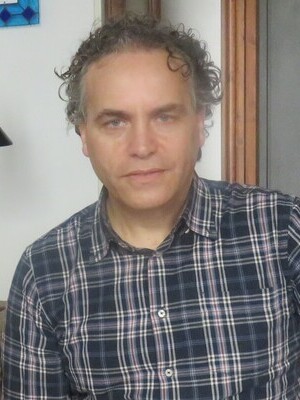
Emeritus
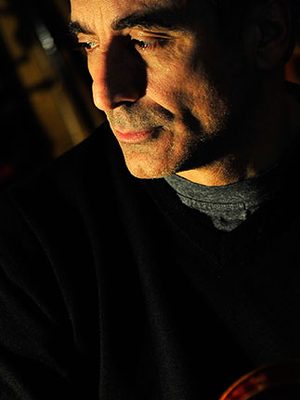
Curriculum completo
Research & knowledge.
The school regularly hosts lectures and conferences by researchers, acousticians, and master craftspeople. A selection of past lectures:
Fibonacci Day 1 1 2 3
A lecture by Prof. Renzi on the Fibonacci sequence and its relationship to violin making proportions and design.
Alla ricerca del suono perfetto
Il caso dei violini Stradivari — an exploration of the acoustic research behind the legendary sound of Stradivari instruments.
A listening experiment
Comparing the timbre of two Stradivari with other violins — a scientific listening study on perceptual differences between historical and contemporary instruments.